Transitioning from 1st Double Materiality to Ongoing Process
A practical guide to moving from a one-time double materiality assessment to an ongoing, audit-ready monitoring process under CSRD.
Introduction
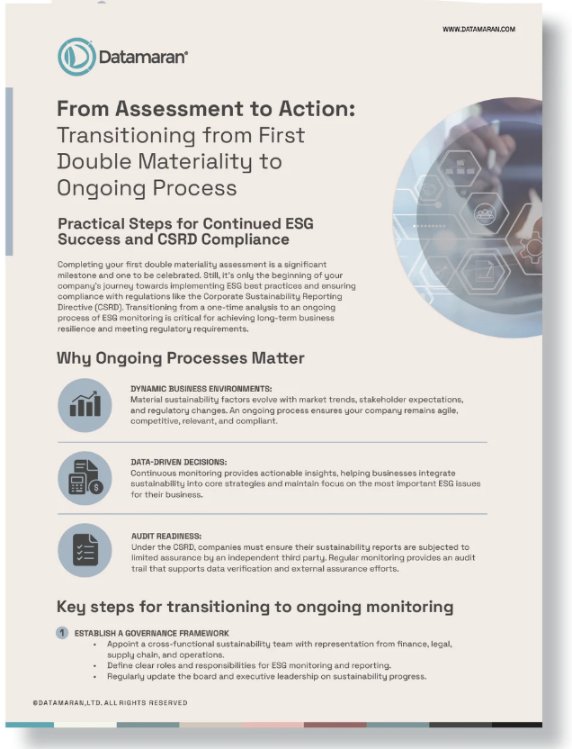
Completing your first double materiality assessment is a milestone, not a finish line. Regulations evolve, stakeholder priorities shift, and business environments move faster than an annual review can track. This guide sets out why double materiality has to become an ongoing process, and the practical steps for building continuous, audit-ready monitoring under CSRD.
Why ongoing processes matter
A one-time assessment reflects a single moment. Within months, new regulatory requirements emerge, stakeholder expectations shift, and the risks that mattered most at assessment can already be out of date. Ongoing monitoring keeps materiality current, supporting dynamic business environments and giving leadership teams the audit-ready evidence CSRD demands, rather than a static snapshot that ages the moment it's published.
Key steps for transitioning
Moving from a one-time assessment to a continuous process takes a structured approach. Five steps make the shift manageable:
- Establish a regular monitoring cadence, rather than treating materiality as an annual exercise
- Assign clear ownership across risk, legal, sustainability, and corporate affairs
- Track regulatory, stakeholder, and market signals continuously, not just at reporting time
- Build a defensible, time-stamped record of how priorities are identified and updated
- Embed monitoring into existing governance workflows so it becomes business as usual
Best practices for success
Leading ESG practitioners treat ongoing monitoring as a cultural shift, not just a process change. Streamlining reporting workflows, aligning stakeholders early, and building monitoring into day-to-day governance turns continuous materiality from a compliance burden into a source of strategic advantage.
Conclusion
Your first double materiality assessment got you to the starting line. Turning it into a continuous, defensible process is what keeps your organization ahead of regulatory change and ready for whatever comes next.